
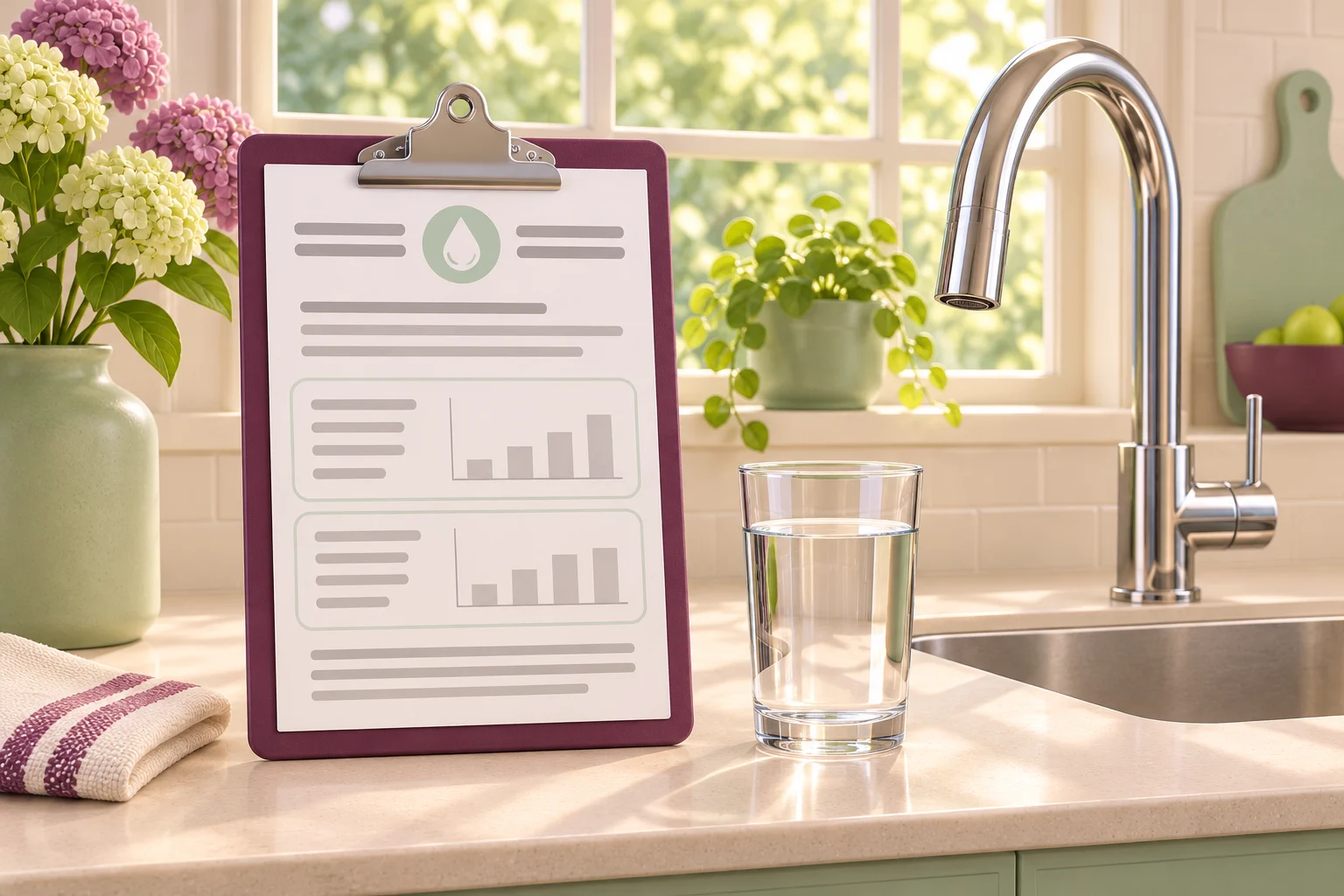
Find the report for your actual supplier.
Start with the utility named on your water bill. Community water systems provide an annual Consumer Confidence Report that describes the water source, reported contaminants and any violations. A neighboring city's report may cover a different system. EPA explains what the report contains.
Look for:
- The supplier name and reporting year.
- The source of the drinking water.
- The result, units and applicable limit for the substance you want to understand.
- Any violation notice, corrective action or contact for questions.
Our Michigan guide explains where to start; the Pinellas County guide links to local supplier reports. Check current utility notices as well as the annual report when the water suddenly changes.
Decide what you want to improve.
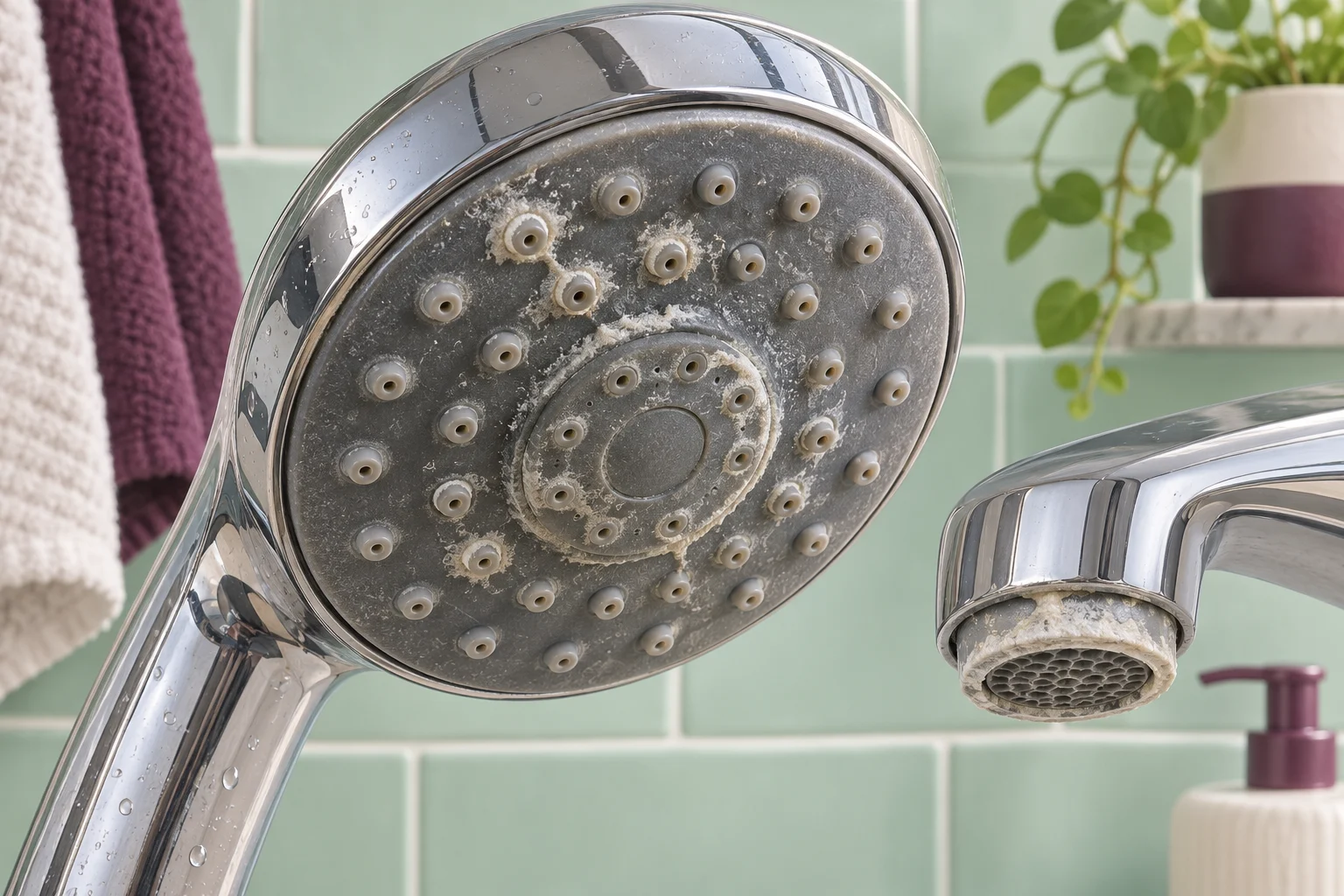
A taste concern, mineral buildup and a laboratory result call for different discussions. Hardness comes largely from dissolved calcium and magnesium; it can leave scale, but hardness alone does not establish a health problem. USGS explains hardness and scale.
Describe the concern before choosing equipment. If deposits are the issue, discuss a hardness assessment and water softening. If the concern is drinking-water taste, compare the relevant filtration options. A filter's label should name the substance it reduces; its size or number of stages is not enough information.
Choose where treatment needs to happen.
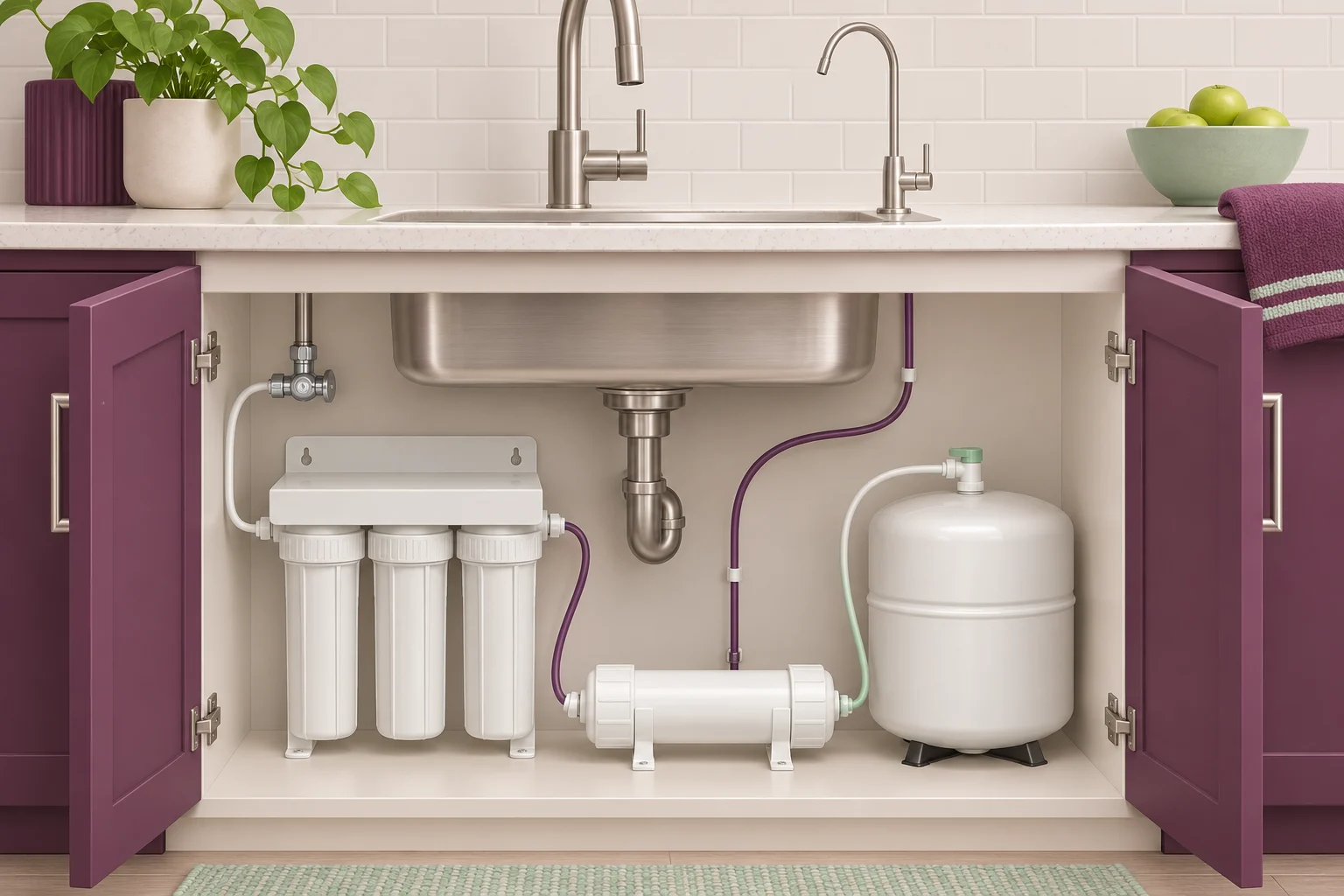
For drinking and cooking at one faucet, an under-sink system may fit the goal. A whole-home installation treats water at the incoming supply, serving the fixtures connected after it. Compare coverage as well as the treatment method. CDC explains point-of-use and whole-home filters.
Reverse osmosis uses a membrane and produces treated water plus a reject-water stream. Discuss cabinet space, faucet arrangements, drain access and the model's water use before installation. EPA's point-of-use RO guide explains these systems and their efficiency differences.
Connect the result to the product claim.
If a specific contaminant is the concern, use a relevant report or laboratory result and check the exact product's certified reduction claim. Certification to one NSF standard does not mean a filter treats every substance. NSF explains how to read the standards.
Rock's water assessment helps with equipment selection. Ask which measurements it includes and whether your question needs separate certified-laboratory analysis. A public-system report is useful context; it is not a test of every faucet or plumbing component in your house.
Plan for the filter after installation.
Keep the model number, replacement part details and manual where you can find them. Ask about service access and ongoing filter costs before choosing the installation. The system-care guide and filter-maintenance page cover the next steps for equipment you already own.
If your utility issues an advisory, follow its instructions. Having a household filter does not automatically exempt a home from an advisory.
City-water questions
Do I need a filter just because I have city water?
No. Your goal and the water information should guide the decision. CDC notes that a filter may be unnecessary when the supply does not contain harmful germs or chemicals; taste can be a separate reason to consider one.
Is chlorine taste the same as hard water?
No. Hardness and chlorine are different water characteristics. Explain what you notice and compare the product's treatment purpose before deciding between filtration and softening.
Will an under-sink RO system treat my shower water?
A system serving the kitchen faucet does not treat the shower supply. Use the system comparison guide to discuss where treatment belongs.
Illustrations show typical equipment or situations, not test results or photographs of Rock installations.