A system for the water you drink and cook with.
Rock installs under-sink and reverse osmosis systems. A point-of-use RO system usually serves a drinking-water faucet. It does not soften the whole home's water or treat every fixture.
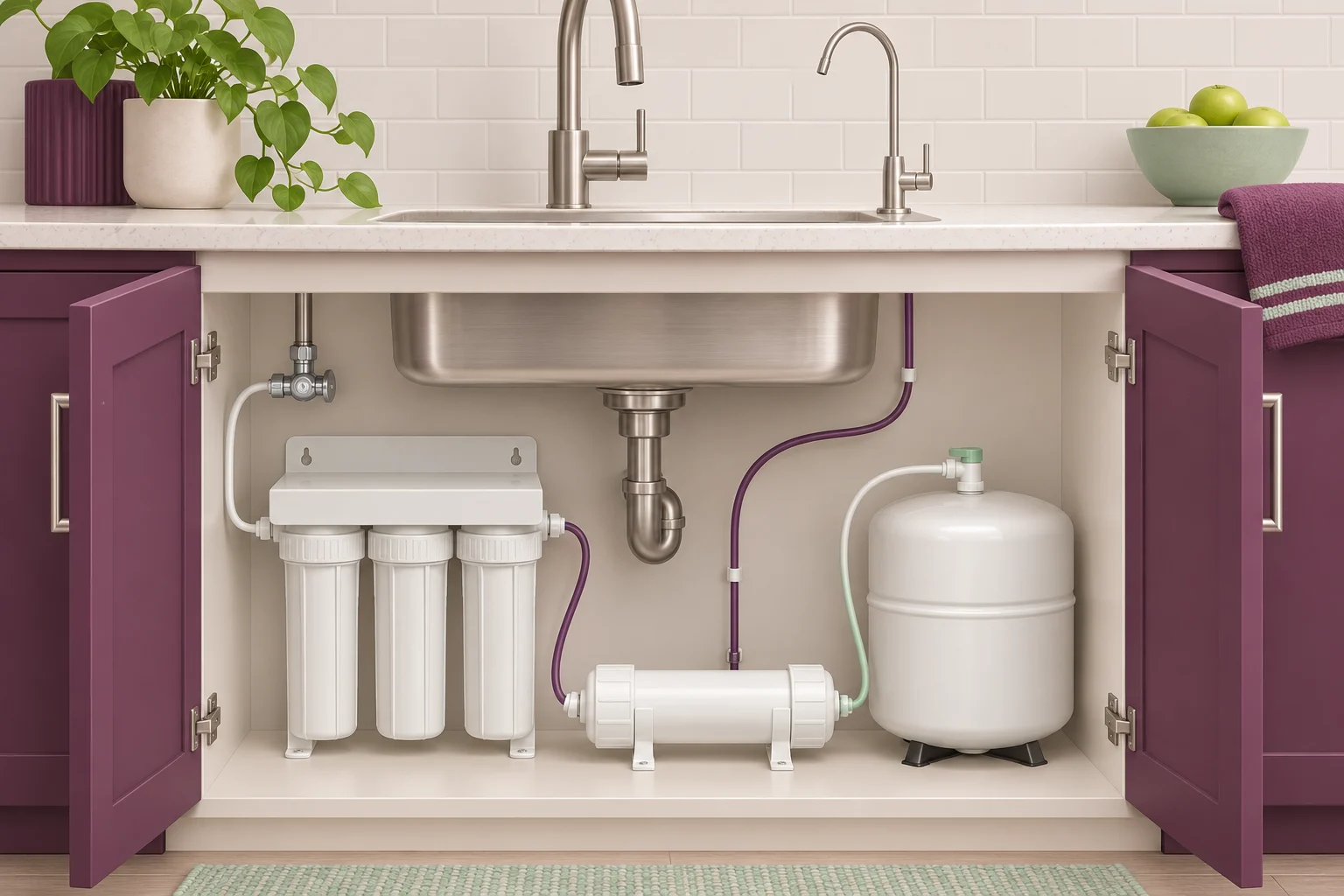
Start with your water results and the specific reduction you need. Check the exact model's certification, capacity and maintenance requirements. An RO label alone does not establish what a system removes. The equipment illustration shows a typical arrangement, not a plumbing diagram or a model sold by Rock.
How the treatment stages fit together.
1. Prepare the incoming water
Prefilters prepare water for the membrane. Sediment and carbon stages are common; the water supply and model determine the pretreatment required.
2. Separate water at the membrane
Pressure moves water through a membrane. The process produces treated water and a separate reject-water stream that goes to the drain.
3. Deliver water to the faucet
Some designs use a storage tank and a final filter. Tankless designs work differently. Ask about the amount available at the faucet and how the system meets your drinking and cooking needs.
EPA explains the process and water-efficiency considerations in its point-of-use RO guide.
Compare performance before counting stages.
More cartridges do not establish better treatment. Match the proposed system to your water results and household use.
- Verify the exact model and the substance named in its certified reduction claim.
- Compare rated production under the manufacturer's stated conditions with your needs.
- Ask about available storage, refill time or tankless flow.
- Compare reject-water use as well as treated-water production.
- Identify the replacement cartridge and membrane part numbers and costs.
NSF/ANSI 58 applies to RO systems, but certification does not cover every possible contaminant. Use the NSF product directory to check model-specific claims.
Plan the space and connections.
- Cabinet space for cartridges, any tank and room to service them.
- Faucet location and whether a new opening is needed.
- Incoming water pressure and any required pretreatment.
- Drain connection and any power supply required by the model.
- Refrigerator or ice-maker connection only if included in the proposal.
Discuss these details with Rock before installation. Explore water filtration services or contact the team for a consultation and quote.
Keep filters and membranes on the right schedule.
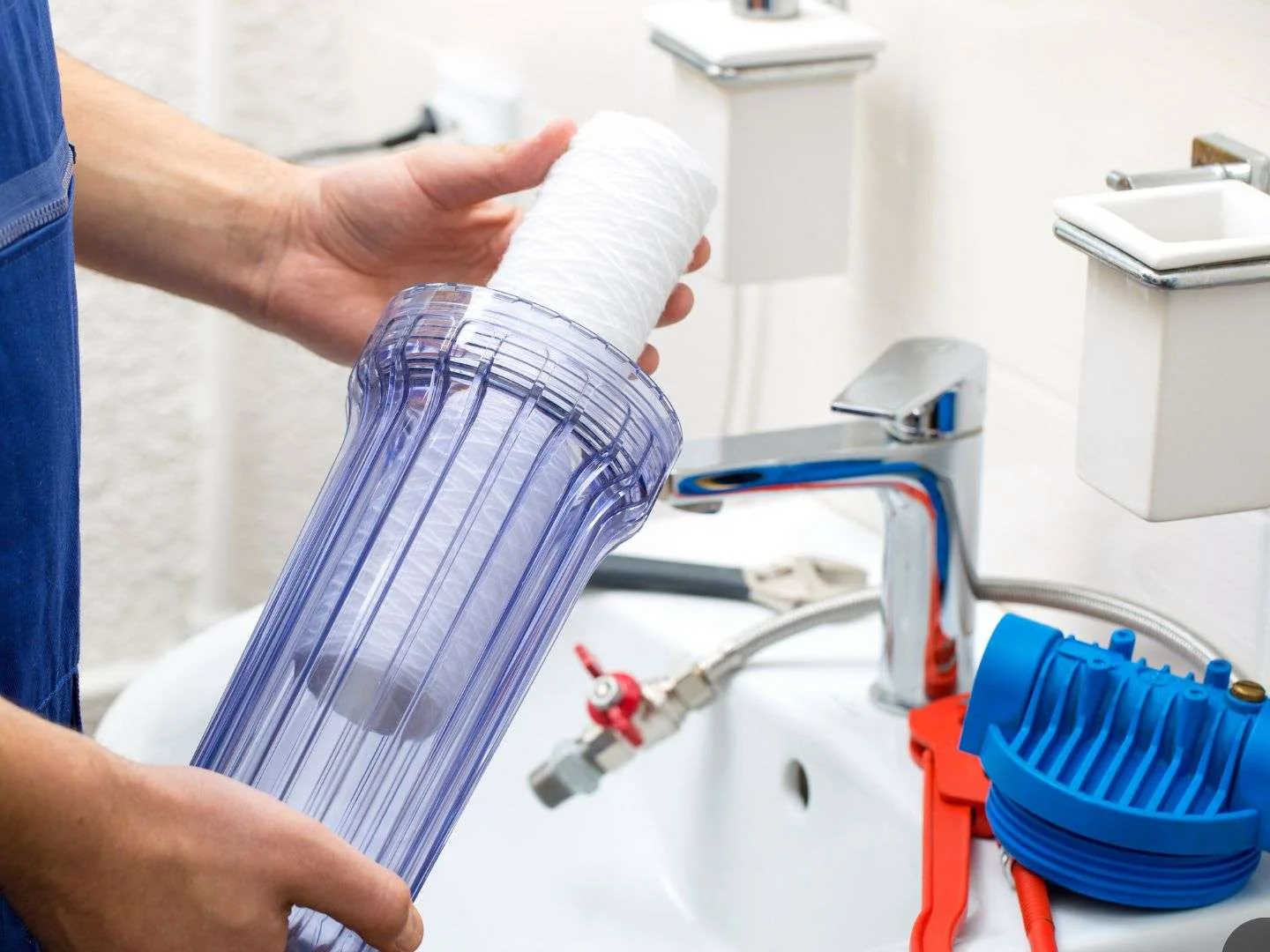
Cartridges and membranes can have different maintenance intervals. Follow the selected model's instructions, including any cleaning or restart procedures. Keep the dates and installed part numbers with your service records.
If flow drops, taste changes or draining seems unusually persistent, note when it happens and whether the system was recently serviced. Those observations help a technician investigate; they do not identify a cause by themselves. Use the system-care guide to prepare for service.
Questions about reverse osmosis
Can RO replace a whole-home softener?
A drinking-water RO system and a softener do different jobs and serve different fixtures. Whether pretreatment is needed depends on the incoming water and selected RO model. Compare both in the system-selection guide.
Does a low TDS reading prove the water is safe?
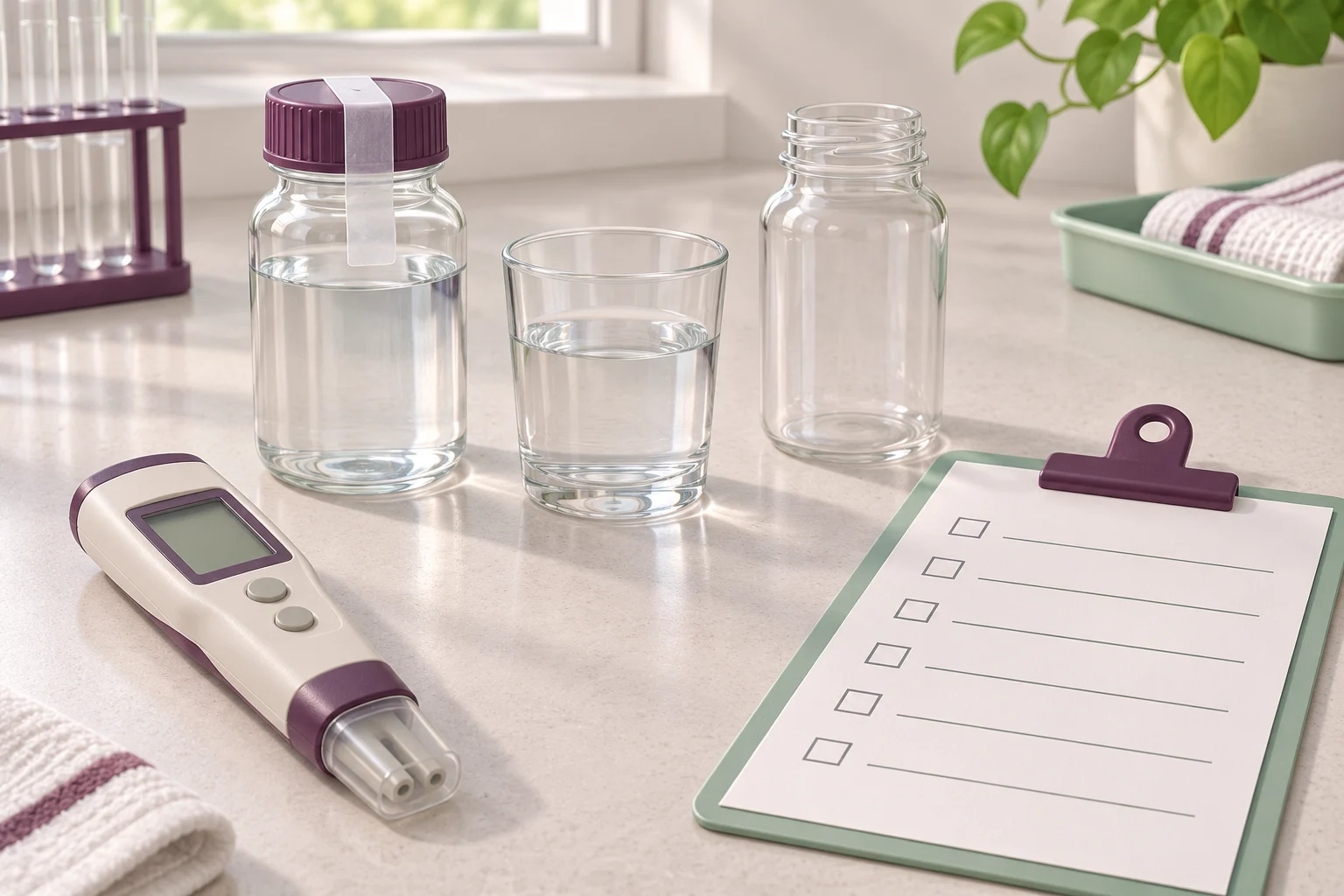
No. Total dissolved solids is an aggregate measurement and does not identify individual contaminants or organisms. For a specific concern, ask which certified-laboratory analysis is needed. See water testing and assessment.
Can an RO system work with well water?
Discuss current well-water results and the model's feed-water limits. An under-sink unit is not a substitute for the well's testing plan or treatment needed elsewhere in the home. Start with the private-well guide.