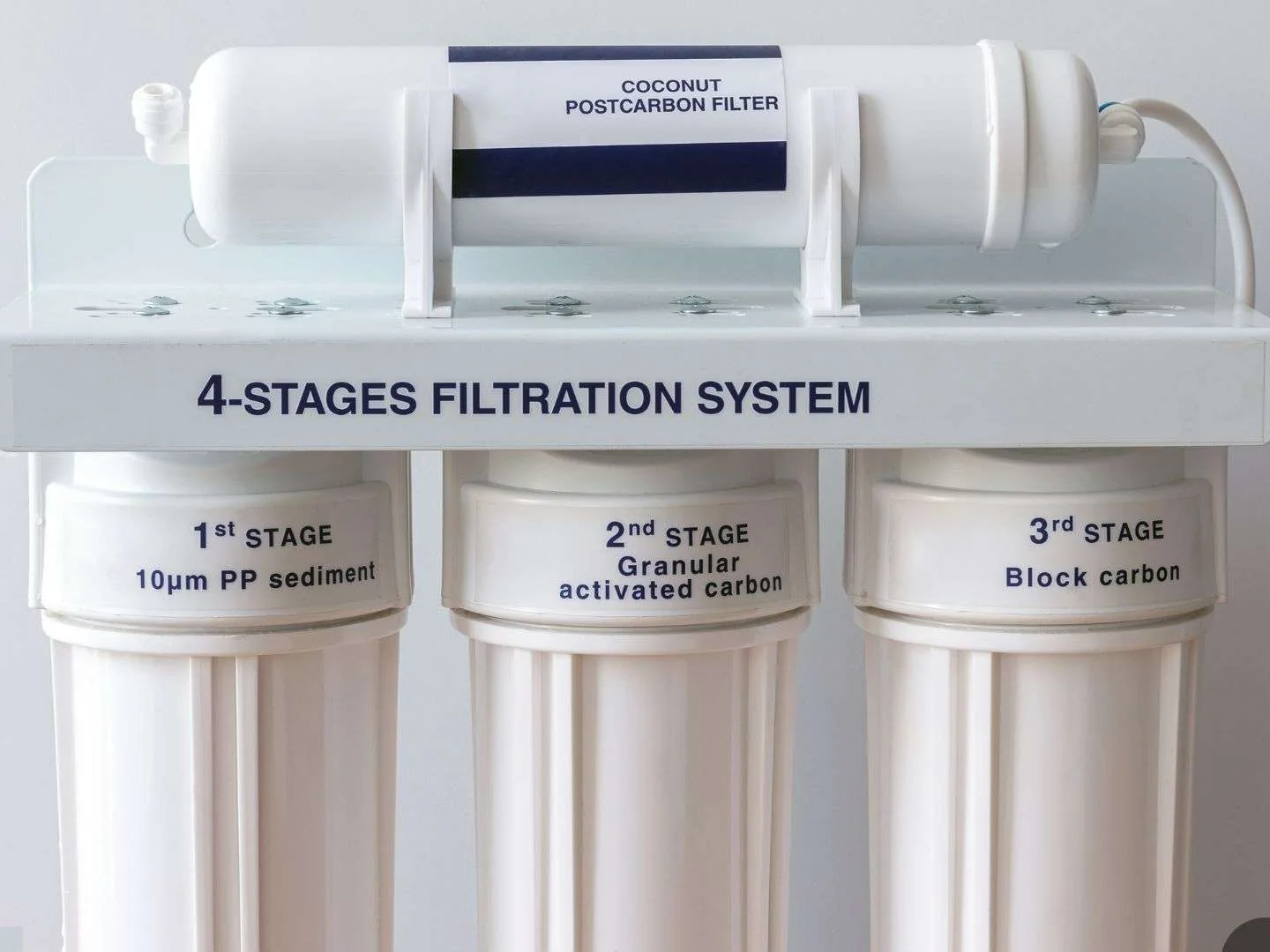
Whole-home filtration
A whole-home system treats water as it enters the property, before it reaches the fixtures the system serves. It can make sense when the treatment goal applies throughout the home. Filter media, capacity and flow rate need to match the water and the household's use.
Ask which concern the proposed filter addresses and whether it can supply the flow you need when several fixtures run together. "Whole-home" describes where the system works, not a promise to remove every contaminant.
Water softening
A softener reduces hardness. It addresses a different job from a filter chosen for taste, particles or a specific drinking-water contaminant. Some homes need both softening and filtration, but the water assessment should explain why each piece of equipment belongs in the plan.
Rock sizes and configures softeners for the household and services existing units. Explore softener installation and care.
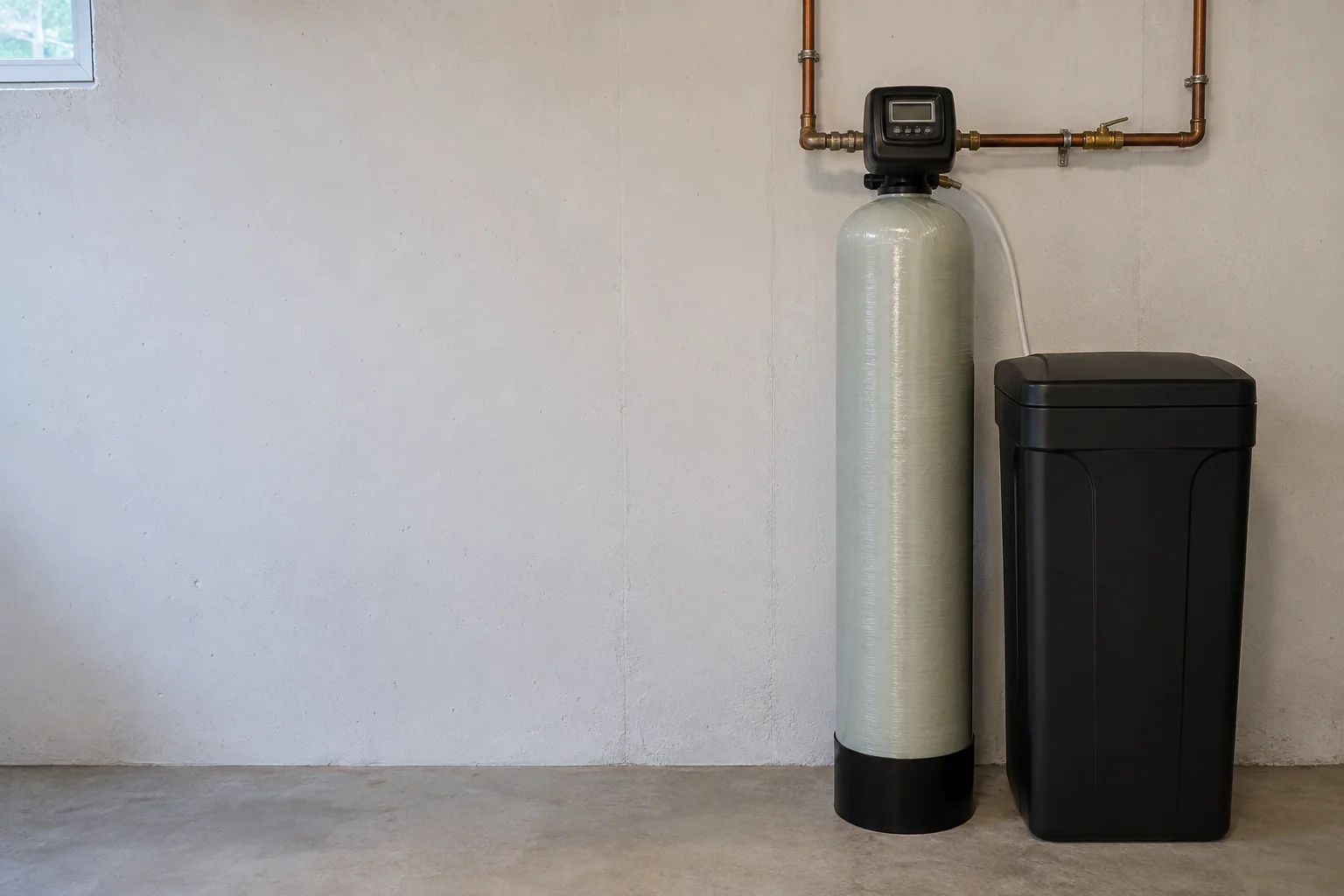
Under-sink filtration and reverse osmosis
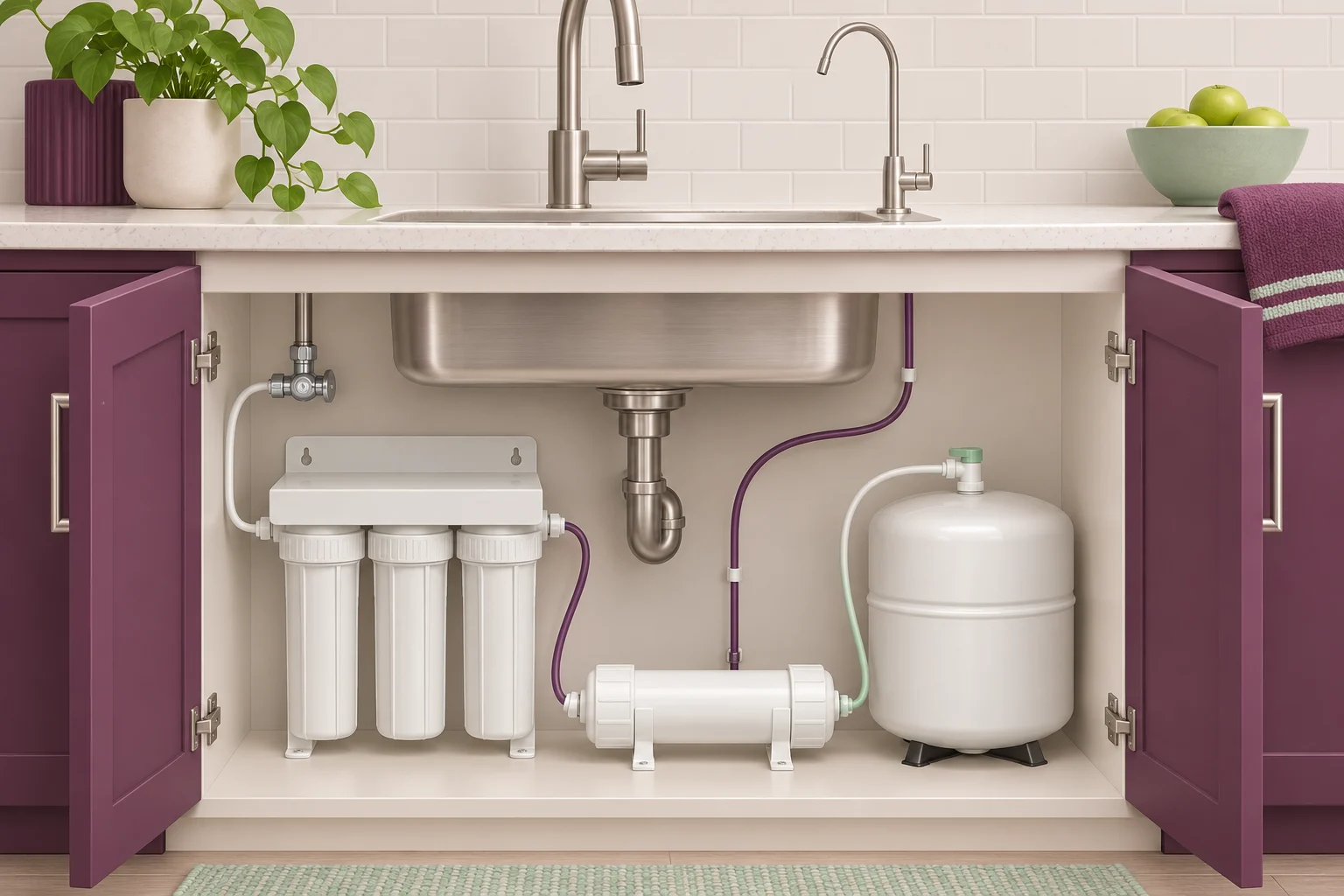
An under-sink system treats water at a particular faucet, usually for drinking and cooking. Reverse osmosis uses a membrane as part of the treatment process; the system's specifications determine what it reduces. It does not treat every tap simply because it is installed in the kitchen.
Discuss cabinet space, the faucet connection, water pressure, the model's drain requirements and filter access before installation. Ask how much drinking water the system supplies and what its replacement filters cost. Explore reverse osmosis or Rock's filtration services. Equipment illustrations are examples; model layouts vary.
Match certification to the concern
NSF/ANSI 42 covers aesthetic claims such as chlorine taste and odor, 44 covers softeners, 53 covers specified health-related reduction claims, and 58 covers reverse osmosis. These numbers are not quality rankings. Certification to a standard does not mean a product reduces every contaminant covered by that standard.
Look up the exact model and claimed reduction in the NSF product directory, then read the capacity and replacement requirements. NSF explains the standards.
Compare the installation and the upkeep
Before deciding, compare the same details in each proposal:
- Treatment goal and exact model, with the relevant certified reduction claim.
- Fixtures served and rated flow when several taps run together.
- Installation space, plumbing, drain and power requirements.
- Access to replace cartridges, membranes or media.
- Ongoing costs for filters, salt where applicable and service.
- What the installation quote includes.
A larger equipment package is not automatically the right fit. The proposal should connect each component to your water results or a specific goal. Keep the manuals and service history so future maintenance follows the installed equipment. Plan filter and system maintenance.
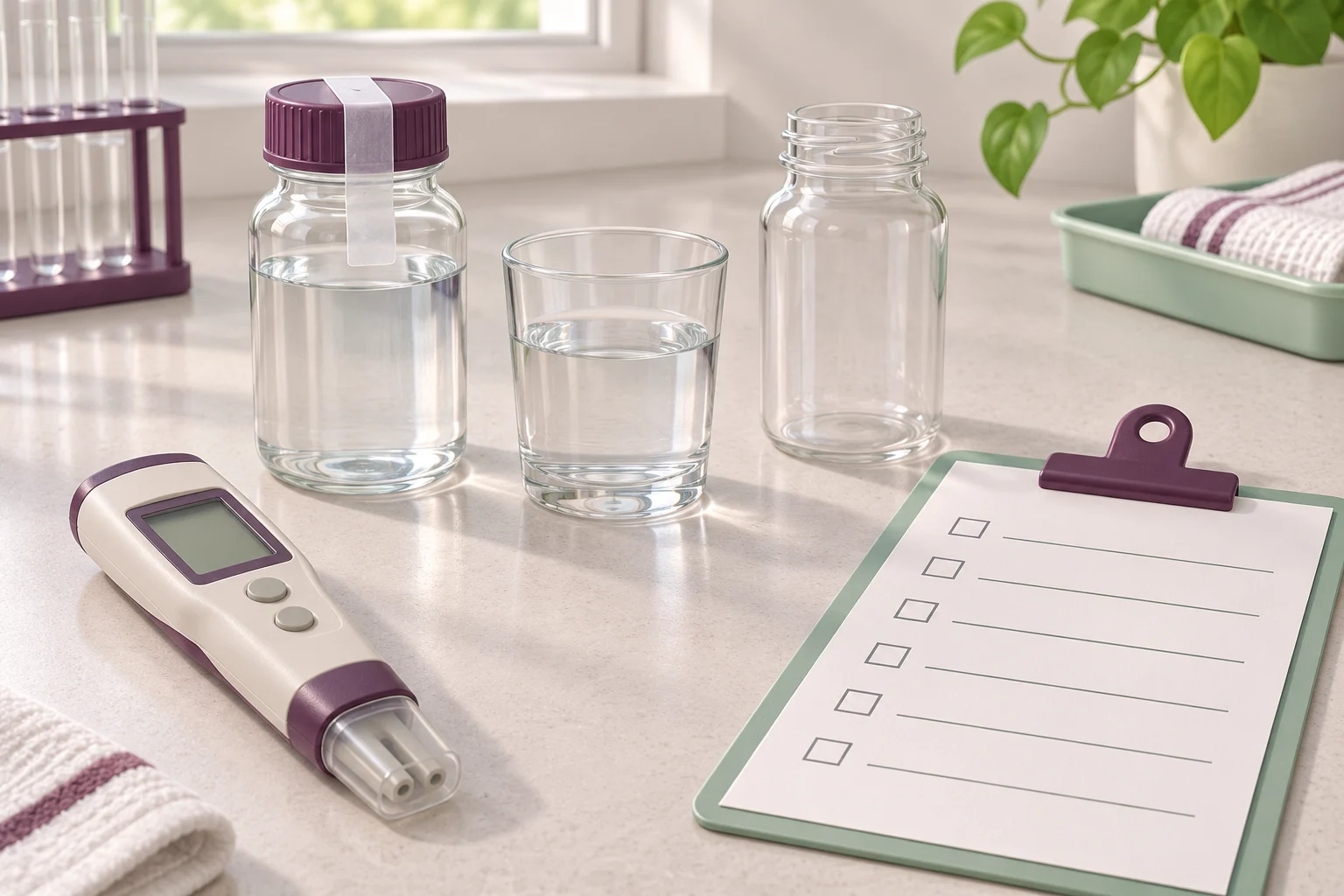
Start with testing when the choice is unclear
Tell Rock whether you use a private well or public water, what has changed and whether you already have treatment equipment. An assessment can guide equipment selection; contaminant-specific laboratory testing may be a separate step. Learn about water testing.