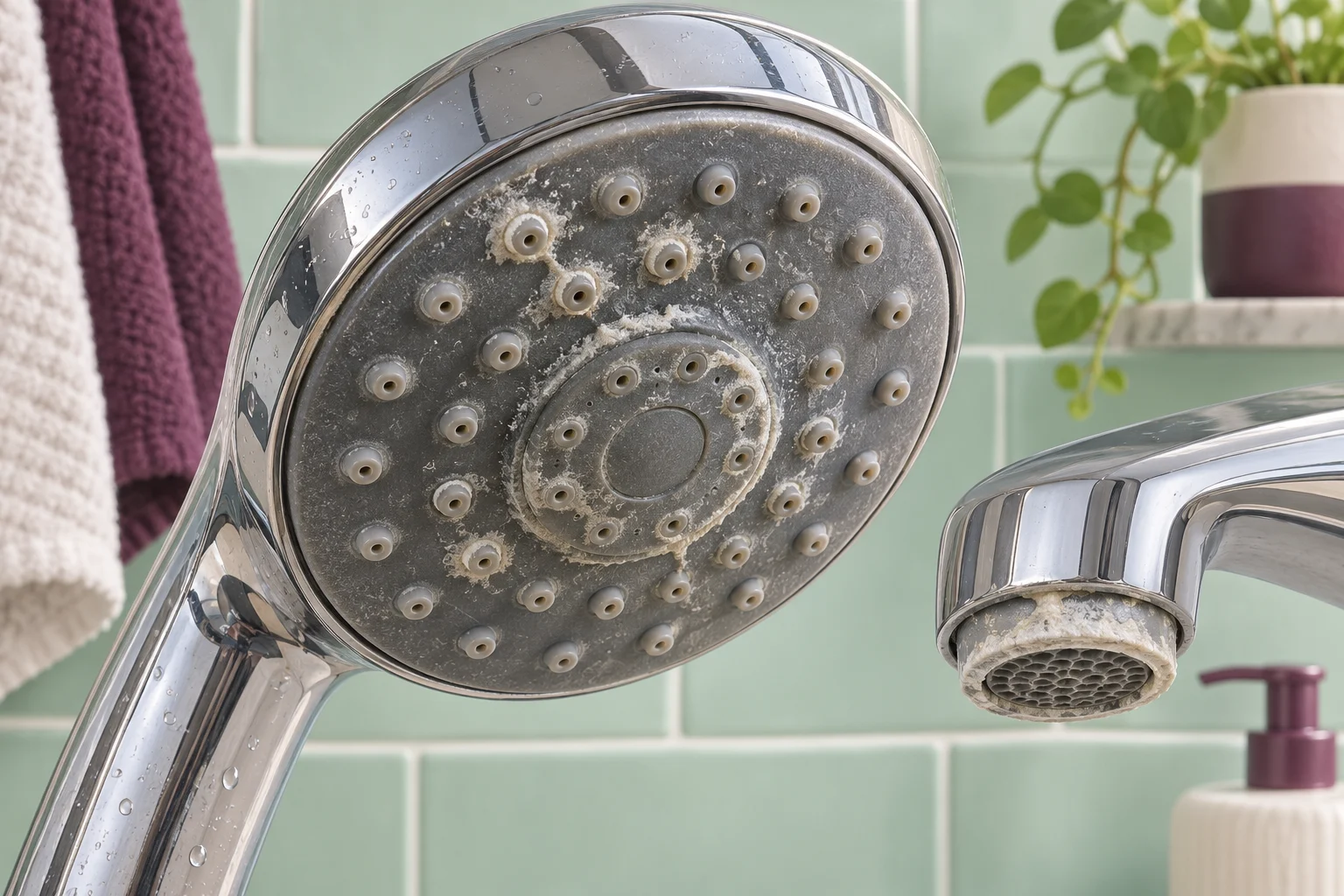
White scale and spots on fixtures
Hard water contains dissolved calcium and magnesium. It can leave mineral deposits on fixtures and water-heating equipment. A hardness measurement helps determine whether softening fits your needs; scale by itself does not tell you whether drinking water is safe. USGS explains water hardness.
Explore water softener installation and service to discuss hardness.
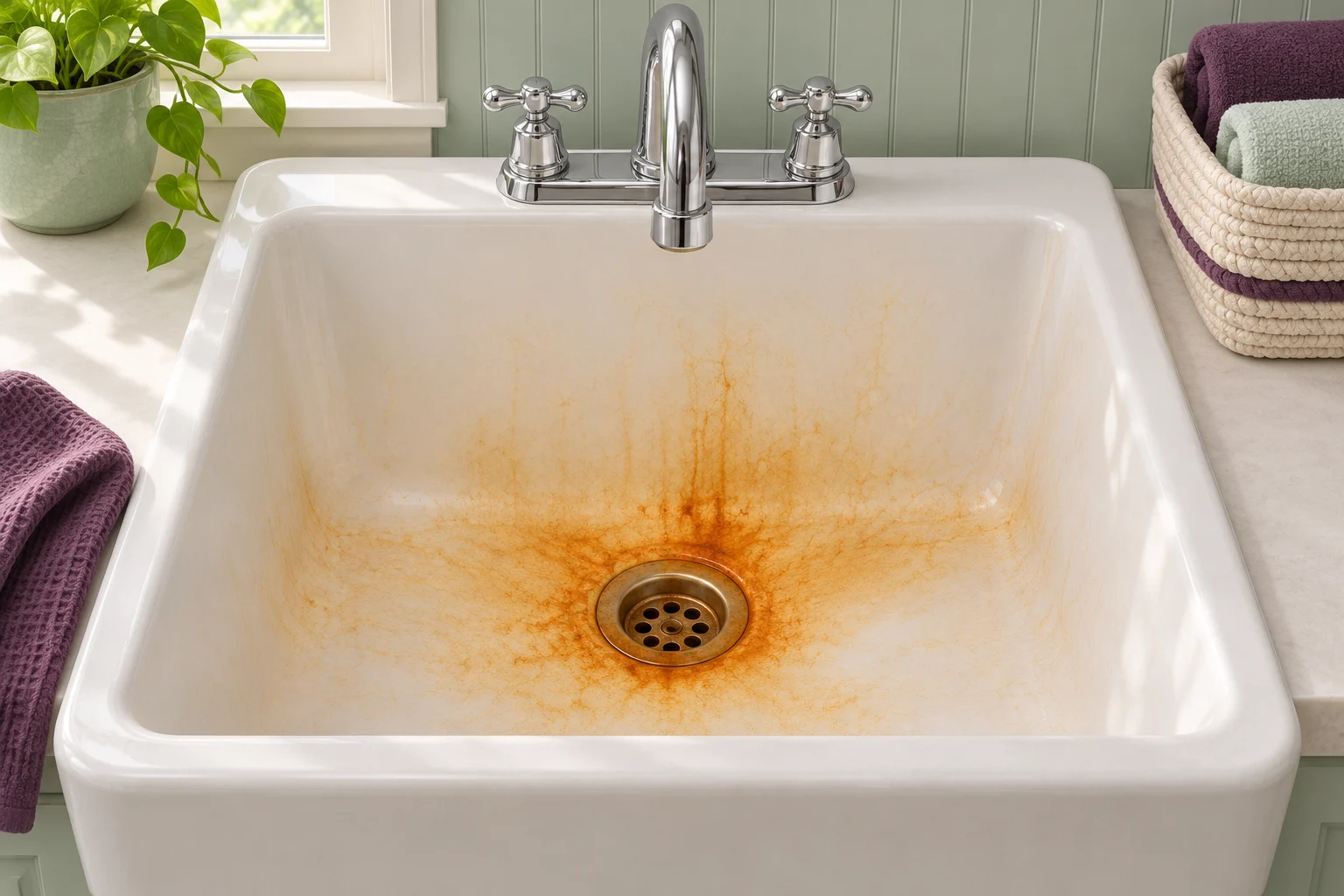
Orange stains or yellow and brown water
Iron can leave rust-colored stains, while sediment, corrosion and organic material can also affect water's appearance. Tannins are one possible cause of yellow or brown color. The color alone does not identify the substance or show that the water is safe.
Dissolved iron may become visible as it oxidizes; already-oxidized iron appears as particles. Iron bacteria are another possible source of staining and slime in wells. These are different conditions, so an iron result and the form of iron matter when evaluating treatment. See Minnesota's iron in well water and iron bacteria guidance.
Note when the change started and whether it appears at every tap. For a public supply, check with your utility about a sudden change; for a private well, discuss testing with your local health department. EPA's nuisance-chemical guidance explains iron and other aesthetic concerns. Michigan's discoloration assessment describes several possible sources of color, including tannins.
Rotten-egg odor
An odor that appears only in hot water may involve the water heater. An odor in both hot and cold well water needs a different investigation. Tell the team which taps are affected before choosing a filter; a softener alone is not a diagnosis or a complete odor-treatment plan. See Michigan's drinking-water concern guide.
Chlorine taste or drinking-water taste concerns
Start with your utility's water-quality report and any current service notices. If taste is the concern, compare a drinking-water filter at the kitchen sink with treatment at the home's incoming supply. Check the exact model's certified reduction claims; the word "carbon" on a filter does not tell you everything it can address.
Learn about water filtration options before choosing a system.
Cloudiness, particles or a sudden change
Describe what you see, when it happens and whether cold water is affected. Air, particles and plumbing conditions can have different causes. A sediment filter is designed for particles; it is not a substitute for testing for dissolved contaminants or bacteria. Follow your utility or health department's instructions if they issue a water advisory.
Arsenic and PFAS require more than a look or taste test
Clear water can still need contaminant-specific testing. Michigan's arsenic guidance explains why laboratory testing matters. For PFAS concerns, use Michigan's filter guidance and verify the exact product's reduction claim. No filter should be assumed to remove every contaminant.
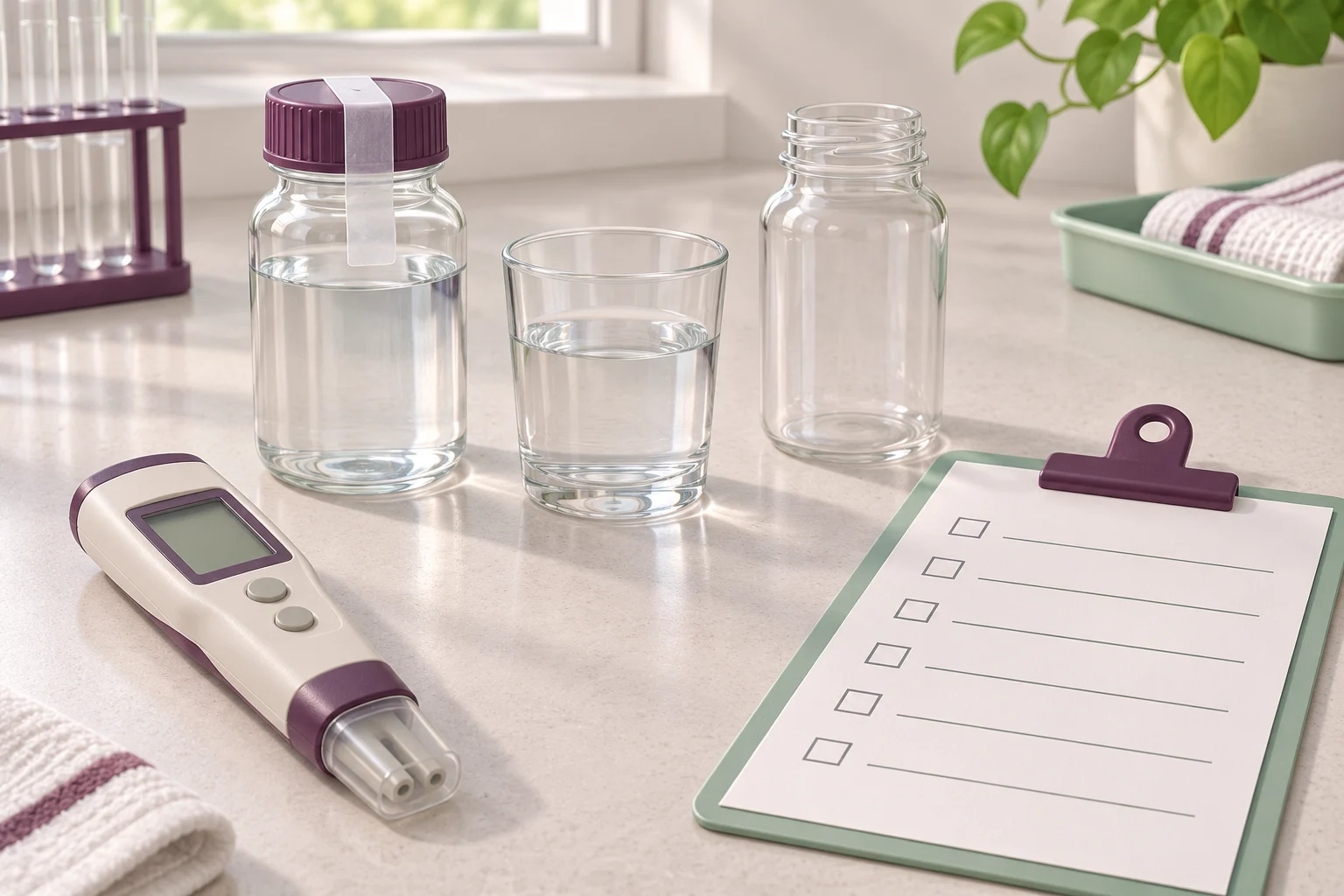
Rock's water assessment can help with equipment selection. Ask which measurements it includes and which concerns need a certified laboratory. Read the Michigan testing guide or plan a water assessment.
Illustrations help describe visible concerns. A stain, smell or clear glass of water does not diagnose contamination. Start with the well-water guide or city-water guide for the next step.